Beyond Ramps and Doorways: How Habitat Helps Build Independence
Every year on July 26, Disability Independence Day commemorates the signing of the Americans with Disabilities Act (ADA), landmark legislation that transformed accessibility in the United States. Thanks to the ADA, millions of Americans can more easily navigate public spaces through features like ramps, braille signage, curb cuts, and wider doorways.
But true independence doesn’t begin and end in public places.
It starts at home.
A home should be a place where people can move freely, care for themselves and their loved ones, and live with dignity. Yet for many families, inaccessible housing creates daily challenges that limit independence and affect quality of life.
At Habitat for Humanity, we believe everyone deserves a home that supports their needs and their future. Habitat builds homes with accessibility in mind: whether through critical home repairs, accessibility modifications, or the construction of new homes designed with accessibility in mind, Habitat helps build more than houses. Habitat builds independence.
A Home Designed for Independence
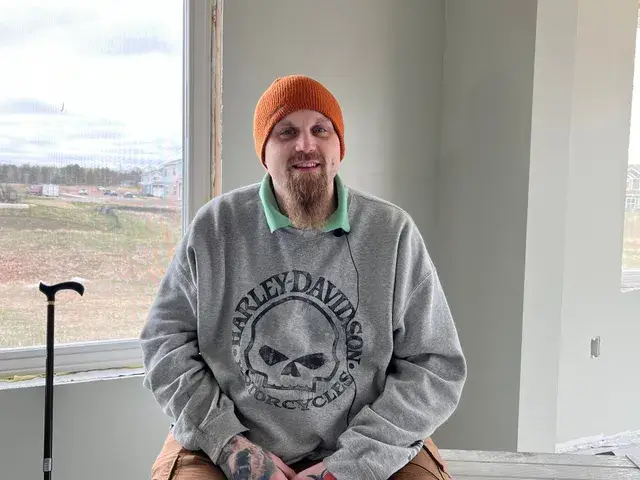
When Derek Beckjordan was diagnosed with multiple sclerosis in 2019, everyday life became increasingly challenging.
Navigating stairs became difficult, and finding housing that would meet his long-term needs felt uncertain. After years of adapting to the realities of a progressive disease, Derek received life-changing news: he had been approved to buy a Habitat for Humanity home.
“When Cheri came to tell me that I was selected, I was so excited,” Derek said. “My family jumped up and down. I still can’t wrap my head around it.”
In 2024, Derek moved into his new home in Northfield, built by Rice County Habitat for Humanity. His unit was specifically designed to support accessibility and independence, with features such as a zero-step entry and a single-level floor plan.
“I am looking forward to the zero-step entry and to have my house all on one floor,” Derek shared before moving in. “That’s going to be huge in my world.”
More than anything, Derek was looking forward to regaining something many people take for granted.
“I am most looking forward to being independent in my own home and being able to do everything myself.”
At the dedication ceremony for his new home, Derek reflected on the impact the Habitat community had on his life.
“Every nail hammered, every brushstroke, and every moment spent building this house was a labor of love that has forever changed my life,” he said. “Habitat for Humanity is a blessing.”
For Derek, home is now a place where he can continue living independently, create memories, and enjoy life with his beloved pug, Dazey Mae.
Independence for the Whole Family
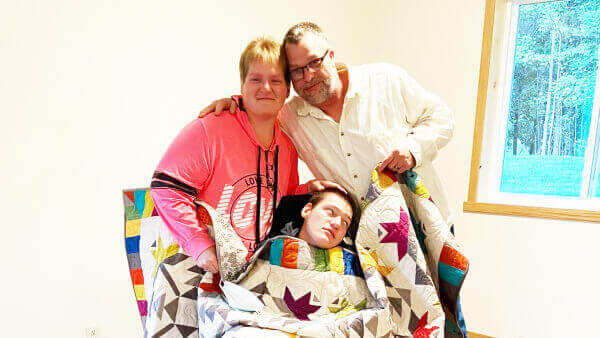
For Katie and Dale, independence looked different, but it was just as important.
Their son, Anthony, has cerebral palsy and uses a wheelchair. The family was living in a two-story home that simply wasn’t designed for their needs. Anthony weighed 170 pounds, and Dale often had to carry him through the house. When they learned they would need to leave their rental home, they struggled to find an accessible housing option.
“We lived in a house that wasn’t suitable for us,” Katie recalled. “We thought we’d try to get into a house that he’d be more comfortable in. That we’d all be more comfortable in.”
Accessible rental housing was difficult to find, and the family couldn’t qualify for a traditional mortgage large enough to purchase or build a home that met Anthony’s needs.
“We couldn’t get a home loan. Especially a loan big enough to cover a handicap-accessible home being built.”
Then came the call that changed everything.
When Habitat informed Katie that her family had been selected for a home built by Lakes Area Habitat for Humanity, she could hardly believe it.
“Tom said, ‘You’ve been chosen for a Habitat home,’ and I literally almost passed out. That was an overwhelming phone call. Probably the best phone call I’ve ever received in my life.”
Today, Katie’s family lives in a home that provides greater accessibility, safety, and comfort for Anthony and for everyone who cares for him.
The impact of homeownership extends beyond accessibility. It creates stability and pride.
“On November first when we went and paid our mortgage the first time, I can’t even explain the feeling that Dale and I had,” Katie said. “We were both standing at the teller crying at the bank. It just felt like such a great accomplishment because we worked hard for this.”
When asked what home means to her, Katie’s answer was simple.
“Home is… beautiful.”
Accessibility Creates Independence
Derek’s story and Katie’s story are different, but they share a common thread.
Accessible housing creates independence.
It allows people to navigate their homes safely. It allows families to care for loved ones with greater ease. It reduces barriers, increases opportunity, and creates a sense of security that every family deserves.
Sometimes that means building a fully accessible home. Sometimes it means adding a ramp, widening a doorway, installing handrails, or making other critical modifications that allow homeowners to remain safely in the homes they love.
Habitat builds homes with accessibility in mind because no matter the project, the goal is the same: helping people live independently and thrive.
Continuing the Promise of the ADA
As we celebrate Disability Independence Day, we recognize that accessibility is about much more than compliance or construction features.
It’s about people.
It’s about ensuring that everyone has the opportunity to live safely, comfortably, and independently in a home that meets their needs.
Thanks to Habitat volunteers, donors, community partners, and supporters across Minnesota, families like Derek’s and Katie’s are building brighter futures, one accessible home at a time.
Because home is more than a place to live.
Home is the foundation for independence.